Degenerative disc disease is a condition caused by ageing, which leads to pain in the back or neck. The pain arises due to a change in the disks situated between the vertebra of the spine, such as a hernia. The discs that are meant to protect the spine from shocks and which help us to bend or turn the back lose their protective layer due to constant wear and tear.
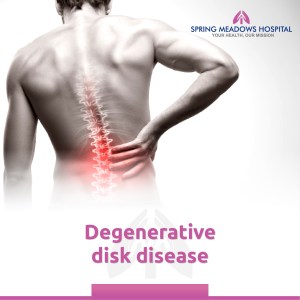
Symptoms of Degenerative Disk Disease
The common symptoms experienced are:
- Pain in the back, along with weakness.
- Radiation of the pain to other areas like buttocks
- Occasional numbness or tingling in the feet or legs
- Spasm in the lower back or neck region
- Less pain seems with body movement
Causes of Degenerative disk disease
Let’s understand a few causes of the degenerative disk disease:
- As you age, our disks which initially had more water content dry out. Discs also start getting thinner. This reduces their capacity to protect the spine from shocks, and on losing their protective padding, other issues also crop up, which causes pain.
- Wear and tear over the years can lead to tiny openings in the outer and the soft interior portion of the disk may slide out of place or expand, resulting in a herniated disc. This may affect the adjacent nerves.
Diagnosis of this disease
The orthopaedic specialist will ask questions about the location of the pain or when you first experienced the pain. He will check your records for past incidents. He will ascertain whether the pain has spread to other areas and will also check if you have had any spinal injuries in the past. The orthopaedic doctor will ask you to make movements like bending or walking to assess the pain’s intensity. Then, if necessary, he may suggest taking an X-ray, MRI scan or discogram to determine any nerve damage or another issue in the vicinity of the spine.
Only after a proper diagnosis, proper treatment can be carried out by the best spine surgery hospital in Delhi
Treatment Methods by the Best Orthopedic Treatment Hospital in Delhi
Depending on the severity of your pain, the doctor decides a treatment plan that will give relief to your symptoms and stop further deterioration. The treatment options include:
- Prescribing medicines: Tylenol or ibuprofen, which provide relief to inflammation and pain. May be prescribed along with medications for muscle spasms if needed. In cases of severe pain, the doctor may suggest getting steroid shots injected in your back near the spine or your muscle or nerve. Facet rhizotomy is a process that uses radiofrequency to prevent pain. Signals may also be used during the process.
- Physiotherapy: Sometimes, specific exercises to strengthen the neck and back area may provide relief to the pain as well as prevent disk degeneration. Pilates or yoga are also known to alleviate symptoms.
- Surgical options: If symptoms do not improve or if they are worsening the doctor may suggest surgical options to the patient. They are:
The first alternative is to join two vertebrae by a process known as spinal fusion, and this makes the spine more stable. It is mostly performed in the neck or lower back portions. This method has been known to provide immense relief to the pain but in rare cases has been known to lead to even more disk degeneration. The best hospital offers it for Spine Surgery in Delhi.
Another option is a procedure called discectomy that removes the injured portion of the disk to relieve the strain on the nerves. Sometimes, an artificial replacement may be inserted in the place of the entire disk to reduce pain.
It is always better to prevent a condition like Degenerative disk disease, which makes all the routine movements like walking or standing painful. Preventive methods include regularly exercising to strengthen the core muscles to prevent obesity, avoiding straining your spine and putting a stop to harmful habits like smoking.
Spring Meadows is one of the best orthopaedic treatment hospitals in Delhi which offers complete diagnosis and then jot the best treatment suitable to you according to your condition and symptoms.
 Spring Meadows Hospital - Best Hospital in Delhi